David Snoxell has been Coordinator of the Chagos Islands (BIOT) APPG since
- He was British High Commissioner to Mauritius, 2000-04, and Deputy
Commissioner of the BIOT, 1995-7.
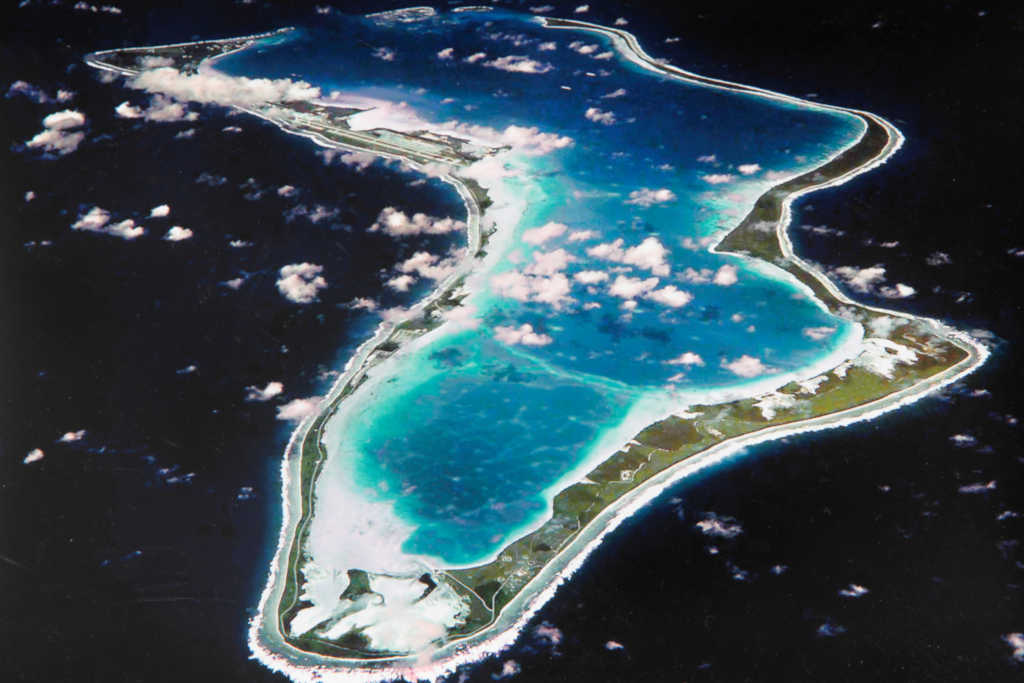
The Chagos Archipelago of 54 islands, formerly administered as a dependency of
the British Colony of Mauritius was excised by Britain in 1965, three years before
Mauritius was granted independence.
It was renamed the British Indian Ocean Territory (BIOT) and its inhabitants (about
1,500) were deported to Mauritius and Seychelles between 1968-73 to make way for
a US military base on the largest island, Diego Garcia. Depopulation enabled the
British Government to avoid having to administer the islands and to report annually
to the UN on its latest colony.
Three BIOT islands were returned to Seychelles at independence in 1976 but none
so far restored to Mauritius.
A settlement of the Chagos dispute made little progress in 2021 as the UK
Government remained intransigent. Prospects for a Chagos settlement are slow but
steady support for an overall settlement continues to gather pace at the international
level.
I believe that not only is a settlement perfectly possible but that it is getting closer.
The international situation has evolved and the UK increasingly isolated, politicians
and officials have moved on and rising international opprobrium makes a settlement
more attractive for ‘Global Britain.’
I start with the simple rationale that when governments and their officials know they
are wrong and can no longer advance a logical case for the status quo they look for
ways to bring about a compromise. After 30 years of defending the detachment of
Chagos from Mauritius, the existence of BIOT and the removal of the Chagossians,
officials know the standard mantras are no longer tenable and that the only way
forward is to negotiate a settlement.
Much depends on whether the FCDO wants to resolve these issues or prefers to let
them smoulder on indefinitely. The FCDO’s oft repeated commitment that the
Chagos Islands will be returned to Mauritius when no longer needed for defence
purposes is flawed as the Outer Islands are not and have never been required
for defence.
The official UN map now shows Chagos as part of Mauritius, the Food and
Agriculture Organisation no longer recognises the UK to be the coastal state, and the
Universal Postal Union has decided that BIOT belongs to Mauritius and its postage
stamps no longer valid. Other UN Specialised agencies such as the International
Telecommunication Union and International Civil Aviation Organisation are likely to
take similar measures.
Following its judgment in January that the UK was not the coastal state in Chagos
the UN Convention on Law of the Sea (UNCLOS) Tribunal will proceed to delimit the
maritime boundary between Maldives and Mauritius. International pressure of this
kind will continue to increase.
It is not too soon for the FCDO to be thinking about what happens to the US base on
Diego Garcia after the end of the 1966 UK/US agreement in December 2036. It is
likely that the FCDO is currently considering a way forward. I would expect the new
BIOT Commissioner to have recommended to Ministers that the domestic and
international arguments for transfer to Mauritius, which would allow for resettlement,
are overwhelming, that Britain’s credibility is at stake and that the bilateral
relationship with Mauritius will continue to suffer without an overall
settlement.
The UK no longer denies that Mauritius has a claim to sovereignty, while still
asserting its own claim. But constructive talks cannot take place until the UK
indicates that it is willing to discuss sovereignty, which in previous talks it refused to
do. I suggest establishing in FCDO a ‘Chagos group’ to manage hand-over
arrangements, a timetable and contents of the talks and appointment on the British
side of an independent senior figure to lead diplomatic discussions with Mauritius.
There must also be discussions with the US on the future of Diego Garcia,
termination of the 1966 UK/US Exchange of Notes and an agreement which
guarantees the long-term security of the base. This could include strengthening
cooperation in the Indian Ocean with Mauritius, India and Australia, which would
enhance the UK’s new policy of tilt towards the Indo-Pacific region. The French
base on Reunion, 140 miles from Mauritius, could also be a helpful asset.
Diego Garcia must eventually be returned to Mauritius, but this can be done in
slower time than with the Outer Islands which will never be required for defence
purposes. As to whether the UK or US should remain sovereign of the joint base until
a date for transfer is agreed, is for discussion between the three parties.
The Marine Protected Area (MPA) declared in 2010, future conservation measures
and scientific research should be included in talks. The UK should discuss with
NGOs continuation of conservation work, research and funding and the need for
Mauritian consent. It should encourage future engagement by these groups with
Mauritius in planning and support. Assistance to Mauritius in facilitating and funding
resettlement should also be provided.
Chagossian groups in Mauritius, Seychelles and UK have differing interests, but they
all agree that they want to be allowed to return and resettle. Many will simply visit
their ancestral homeland rather than resettle. Further compensation might be part of
a package. In any case the Government should agree with Chagossians how to
spend the 2016 £40m assistance package (only £800k spent in five years) or
perhaps convert it to compensation payments or put it towards resettlement costs.
At its 85th meeting on 20 October the Chagos Islands (BIOT) APPG, which has
members from all seven political parties including former FCO and DIFID Ministers,
struggled to understand why over the last twenty years the FCDO had not been
willing to negotiate an overall settlement with Mauritius and the Chagossians and
why the UK continues to defy the international community over Chagos. In July 2019
the Group issued a statement which:
“urges the next British government to respect the will of the UN, the Opinion of the
International Court of Justice and the requirements of international law, which, from
the signature of the UN Charter in 1945, remain the keystone of the UK’s foreign
policy and commitment to international order, based on the rule of law.”
HM Government could bring about a settlement that ends this tragedy, restores
Britain’s place as a leading nation which respects the rule of law, self-determination
and human rights, and redresses the UK’s standing, diminished by our prolonged
failure to come to grips with this relic of colonialism and the Cold War. The UK needs
to accept the verdicts of the 2015 Arbitral Tribunal Award on the MPA, the 2019 ICJ
Advisory Opinion, the UNGA resolution which endorsed it and the 2021 UNCLOS
Tribunal.
The UK and Mauritius could then announce to the next session of UN General
Assembly in September 2022 the terms of an agreement and register that
agreement with the UN as a UK/ Mauritius treaty. This would bring an end to 22
years of domestic and international litigation which has so far cost the taxpayer
about £12 million.