The President of the African Prosecutors Association, Fernando Pitta Groz, Attorney General, Angola,
The Solicitor-General, D.K. Dabee, G.O.S.K, SC,
The Director of Public Prosecutions, Mr. S Boolell
Distinguished delegates from various jurisdictions
All protocols observed,
Ladies and gentlemen,
It is an immense pleasure to address you and to welcome you to Mauritius on behalf of the Government of Mauritius. It is also an immense pride to be in the midst of my African brothers and sisters this morning. Our continent is our first port of call when we require assistance and solidarity. Mutual support is a hallmark of our diplomatic ties.
Before I address you on the theme of this conference, I would like to take some of your time to address you on 2 matters:
- African solidarity; and
- the demise of one of our legal luminaries in Africa, and a close friend of Mauritius, Professor VCRAC Crabbe.
With so many delegations from African countries here for the Africa Prosecutors Association, I would fail in my duty if I do not recall, and place on record, the precious assistance of all the African countries as well as the African Union for the invaluable assistance extended to Mauritius in its legal battle concerning its territory namely the Chagos Archipelagos. On 31 January 2017, the Heads of State and Government of the African Union adopted a resolution renewing the support of the Continent to Mauritius on the Chagos Archipelago. The Summit resolved to fully support the action initiated at the level of the United Nations General Assembly by the Government of Mauritius. The objective of this support is to ensure the completion of the decolonisation of Mauritius and to enable it to effectively exercise its sovereignty over the Chagos Archipelago, including Diego Garcia. Given the importance of the Chagos issue in the context of the decolonisation process of Africa, the Summit requested that it remain seized of the matter and has requested that it be kept informed of progress on the matter at the next summit.
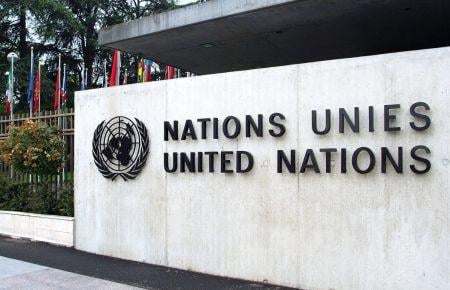
I cannot also fail to place on record that on 22 June 2017, the United Nations General Assembly referred the dispute between the United Kingdom and Mauritius over disputed island territory of Chagos Archipelago to the International Court of Justice (ICJ). By a margin of 94 to 15 countries, delegates supported a resolution of Mauritius to seek an advisory opinion from the ICJ. Without the support of the African continent which stood as one before the United Nations, Mauritius would never have been able to take its dispute to the International Court of Justice. On 3rd of September 2018 the African Union (AU) took part in the public hearings before the International Court of Justice (ICJ) on the request for an advisory opinion regarding the Legal Consequences of the Separation of the Chagos Archipelago from Mauritius in 1965. I wish express the deep gratitude and appreciation of Mauritius for the precious assistance of the AU before the International Criminal Court. The AU delegation was expertly led by Ambassador. Dr. Namira Negm, Legal Counsel of the AU who offered submissions before the ICJ. Our thanks also go to our brothers and sisters from Botswana, Kenya, Nigeria, South Africa and Zambia who, in addition of being part of the AU initiative, also offered oral submissions before the ICJ. Mauritius has been humbled by the support received from its African brothers and sisters.
I cannot, also, fail to say a few words about late Professor Vincent Cyril Richard Arthur Charles Crabbe, an African legal luminary, who is very close to our hearts, who passed away 7 September 2018. There are very few persons who have unanimously commanded as much respect and admiration from the continent as Professor Crabbe. Justice Crabbe was Ghana’s first Electoral Commissioner and also an exceptional draftsman who supported the drafting of many legislative instruments of other African countries and trained many other students in legislative drafting. He was the main resource person for the Commonwealth Legislative Drafting Course run in Ghana and which has been attended by hundreds of African participants. He remained regularly sought-after resource person for legislative drafting courses organised by several African countries, including Mauritius, Namibia and Zambia. We had the privilege of having a number of Mauritian Parliamentary Counsel, Judges and law officers who have had training in legislative drafting with him in Barbados, Ghana and in Mauritius. The legacy of Professor Crabbe on Mauritius will remain long after his passing.
I shall now come to the crux of the matter, that is, the theme of the conference: ‘PROSECUTORIAL INDEPENDENCE AND ACCOUNTABILITY: A PREREQUISITE OF THE RULE OF LAW’.
The Government of Mauritius staunchly supports all initiatives towards strenghtening the rule and law and is equally determined to combat crime. The work being done on trafficking in persons, the setting up of the Commission on Drug Trafficking and the ongoing discussion on a Police and Criminal Justice Bill are only a few examples of this commitment to the maintenance of law and order. Holding the APA conference in Mauritius underscores this commitment to law and order to the region, and to the world. The Government of Mauritius is honoured to associate itself with this conference.
Mauritius has followed the legal traditions of many Commonwealth jurisdictions insofar as prosecutorial independence is concerned. Our Director of Public Prosecutions and his legal staff are law officers and are appointed by an independent appointing authority namely the JLSC established under section 85 of the Constitution. In addition to the appointment mechanism of law officers which ensures that there is no political interference with nominations, we have put the holder of the post Director of Public Prosecutions at par with Judges of the Supreme Court in so far as constitutional status and security of tenure is concerned.
With the independence of prosecutors and their crucial role in upholding the rule of law comes great responsibilities. The independence of prosecutors is not a prerogative or privilege conferred in the interest of the prosecutors, but a guarantee in the interest of a fair, impartial and effective justice that protects both public and private interests of the persons concerned. Prosecutors must be independent not only from the executive and legislative authorities but also from other actors and institutions, including those in the areas of economy, finance and media.
Excellencies, Ladies and Gentlemen, before concluding, I wish to seize this opportunity to propose a theme for debate in the margins of this conference. Our continent is facing a major challenge in an increasingly globalised world where transnational crime is on the rise. We need to find faster and more efficient way to process requests – both incoming and outgoing – for mutual legal assistance and smoothen procedural considerations. As Central Authority for the Republic of Mauritius I urge you to find ways and means to find a truly African solution where requests for MLA between our countries can be expedited without for that matter compromising on the rights or obligations of third parties.
I wish you all successful deliberations. I look forward to reading your concluding remarks and statement at the end of this important Conference on prosecutorial independence and prosecutorial accountability.
Ladies and Gentlemen, I thank you for your attention and I encourage you to find some time, despite your busy schedule and important deliberations, to enjoy Mauritian scenery, culture and hospitality.
ATTORNEY GENERAL’S OFFICE
30.10.18